
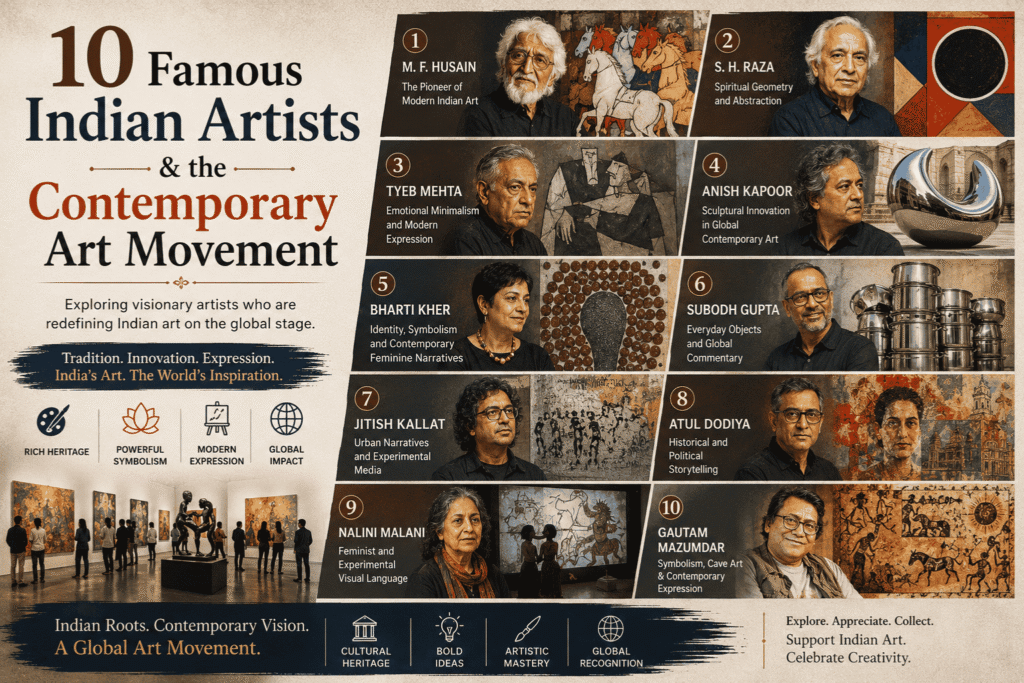
India has long been a land of artistic diversity, cultural symbolism, and visual storytelling. From ancient cave paintings and temple murals to contemporary installations and abstract expressionism, Indian art has constantly evolved while remaining deeply connected to history, spirituality, and identity.
Today, Indian artist exhibitions are gaining increasing recognition across the global art market. Contemporary Indian artists are redefining modern art through experimentation, symbolism, abstraction, cultural narratives, and interdisciplinary creative practices.
The rise of international art fairs, online galleries, and global exhibitions has introduced Indian contemporary art to audiences worldwide. Modern Indian artists are now participating in major exhibitions across Dubai, London, Paris, Singapore, and New York, helping shape the global contemporary art movement.
In this article, we explore ten influential Indian artists and how their artistic contributions continue shaping contemporary art and modern exhibition culture.
The Rise of Contemporary Indian Art
Contemporary Indian art represents a powerful balance between:
- tradition and modernity
- spirituality and experimentation
- symbolism and abstraction
- local identity and global expression
Modern Indian artists frequently explore:
- mythology
- social change
- memory
- urbanization
- political identity
- spirituality
- cultural transformation
This combination gives Indian contemporary art a unique global presence.
Indian artist exhibitions now attract:
- collectors
- galleries
- museums
- curators
- international audiences
who seek authentic cultural narratives and innovative visual expression.
Explore contemporary artworks here:
Gallery
All categories
1. M. F. Husain – The Pioneer of Modern Indian Art
Maqbool Fida Husain remains one of the most internationally recognized Indian artists.
Known for:
- bold figurative compositions
- horses
- mythology-inspired imagery
- dynamic brushwork
Husain transformed Indian modernism by blending folk traditions with contemporary visual language.
His exhibitions helped establish Indian contemporary art within international gallery systems.
2. S. H. Raza – Spiritual Geometry and Abstraction
Sayed Haider Raza became famous for integrating:
- geometric abstraction
- spiritual symbolism
- Indian philosophy
- cosmic forms
His iconic “Bindu” series explored concepts of creation, energy, and universal consciousness.
Raza’s exhibitions demonstrated how Indian spirituality could merge seamlessly with global abstraction.
3. Tyeb Mehta – Emotional Minimalism and Modern Expression
Tyeb Mehta’s paintings are recognized for:
- emotional intensity
- fragmented figures
- minimalist visual language
- existential themes
His work reflected human conflict, violence, and psychological tension through simplified yet powerful compositions.
Mehta remains one of India’s most respected contemporary artists internationally.
4. Anish Kapoor – Sculptural Innovation in Global Contemporary Art
Although internationally based, Anish Kapoor remains one of the most influential artists of Indian origin.
Known for:
- monumental installations
- reflective surfaces
- conceptual sculpture
- spatial experimentation
Kapoor redefined contemporary sculptural exhibitions through immersive visual experiences.
His work demonstrates how Indian artists have influenced global contemporary art far beyond traditional painting.
5. Bharti Kher – Identity, Symbolism, and Contemporary Feminine Narratives
Bharti Kher is known for exploring:
- identity
- femininity
- mythology
- transformation
Her use of symbolic materials such as bindis creates layered cultural narratives that challenge traditional representation.
Kher’s exhibitions have received major international recognition for combining Indian symbolism with conceptual contemporary art.
6. Subodh Gupta – Everyday Objects and Global Commentary
Subodh Gupta transformed ordinary Indian household objects into monumental contemporary installations.
Using:
- stainless steel utensils
- found objects
- industrial materials
he explored globalization, migration, consumption, and cultural identity.
His exhibitions demonstrate how everyday Indian life can become part of global contemporary discourse.
7. Jitish Kallat – Urban Narratives and Experimental Media
Jitish Kallat’s work combines:
- painting
- installation
- photography
- public art
His art frequently examines:
- urban transformation
- memory
- political identity
- human connectivity
Kallat’s exhibitions represent the increasingly interdisciplinary nature of Indian contemporary art.
8. Atul Dodiya – Historical and Political Storytelling
Atul Dodiya blends:
- realism
- conceptual layering
- political commentary
- historical references
His artworks frequently engage with:
- nationalism
- memory
- artistic history
- social identity
Through mixed media and symbolic storytelling, Dodiya creates intellectually layered visual narratives.
9. Nalini Malani – Feminist and Experimental Visual Language
Nalini Malani is known for:
- video art
- installations
- feminist narratives
- mythological reinterpretation
Her exhibitions challenge social structures while exploring displacement, violence, and gender politics.
Malani helped expand the boundaries of contemporary Indian art beyond conventional painting practices.
10. Gautam Mazumdar – Symbolism, Cave Art & Contemporary Expression
Gautam Mazumdar represents a contemporary artistic voice that bridges:
- ancient symbolism
- mythology
- cave art influences
- textured abstraction
- modern visual storytelling
His artworks frequently explore:
- spiritual forms
- tribal motifs
- symbolic abstraction
- cultural memory
Exhibitions such as:
- Cave to Canvas
- Kamal Khila Hai
- Arabian Allure
demonstrate how contemporary Indian artists continue reinterpreting historical and cultural references through modern artistic language.
Learn more about the artist here:
About
Explore exhibitions here:
Exhibitions
Why Indian Artist Exhibitions Matter Globally
Indian artist exhibitions have become important because they offer:
- diverse cultural perspectives
- philosophical storytelling
- symbolic depth
- visual experimentation
Global collectors increasingly appreciate Indian contemporary art for its ability to combine:
- emotional resonance
- cultural richness
- modern aesthetics
Indian exhibitions also help create international dialogue between:
- tradition and innovation
- regional identity and global expression
The Role of Symbolism in Contemporary Indian Art
One recurring characteristic across many Indian artists is the use of symbolism.
Common themes include:
- lotus imagery
- sacred geometry
- mythology
- tribal forms
- spiritual abstraction
These symbols allow artworks to communicate universal human emotions while remaining rooted in Indian cultural identity.
Contemporary Indian Art and the Global Market
The global art market increasingly values:
- originality
- authenticity
- cultural diversity
- conceptual depth
Contemporary Indian artists fulfill these expectations through highly individual artistic voices.
Today, Indian art is regularly featured in:
- international biennales
- art fairs
- museum exhibitions
- online global platforms
This growing visibility continues expanding the international influence of Indian contemporary art.
How Technology Changed Indian Art Exhibitions
Digital platforms now allow Indian artists to:
- showcase collections globally
- archive exhibitions online
- connect directly with collectors
- build international audiences
Virtual galleries and artist websites have transformed accessibility within contemporary art.
The Future of Contemporary Indian Art
The future of Indian contemporary art appears increasingly:
- experimental
- interdisciplinary
- global
- technologically integrated
Emerging artists continue exploring:
- mixed media
- symbolic abstraction
- immersive installations
- environmental themes
- digital integration
At the same time, cultural memory and spirituality remain strong creative foundations.
This balance between heritage and innovation ensures the continuing growth of Indian art globally.
Why Collectors Are Investing in Indian Contemporary Artists
Collectors increasingly support Indian artists because their work offers:
- strong conceptual identity
- cultural storytelling
- emotional depth
- originality
Indian contemporary paintings often hold long-term artistic and investment value due to their growing international recognition.
Collectors also appreciate the diversity within Indian art, ranging from:
- abstraction
- symbolism
- figurative art
- installation
- experimental mixed media
Final Thoughts on Indian Artist Exhibitions
The contemporary art movement in India continues evolving through innovation, symbolism, experimentation, and cultural reinterpretation.
Indian artist exhibitions are no longer confined to regional recognition. They are actively shaping global contemporary art conversations through unique visual languages and deeply rooted cultural narratives.
From pioneers like M. F. Husain and S. H. Raza to contemporary voices such as Gautam Mazumdar, Indian artists continue redefining what contemporary art can represent in a rapidly changing world.
As global audiences increasingly seek authenticity, emotional depth, and cultural richness, contemporary Indian art will likely continue expanding its influence across international galleries, museums, exhibitions, and collector markets for years to come.
Connect Now: Facebook | Instagram | Twitter | Threads | Linkedin | Pinterest