
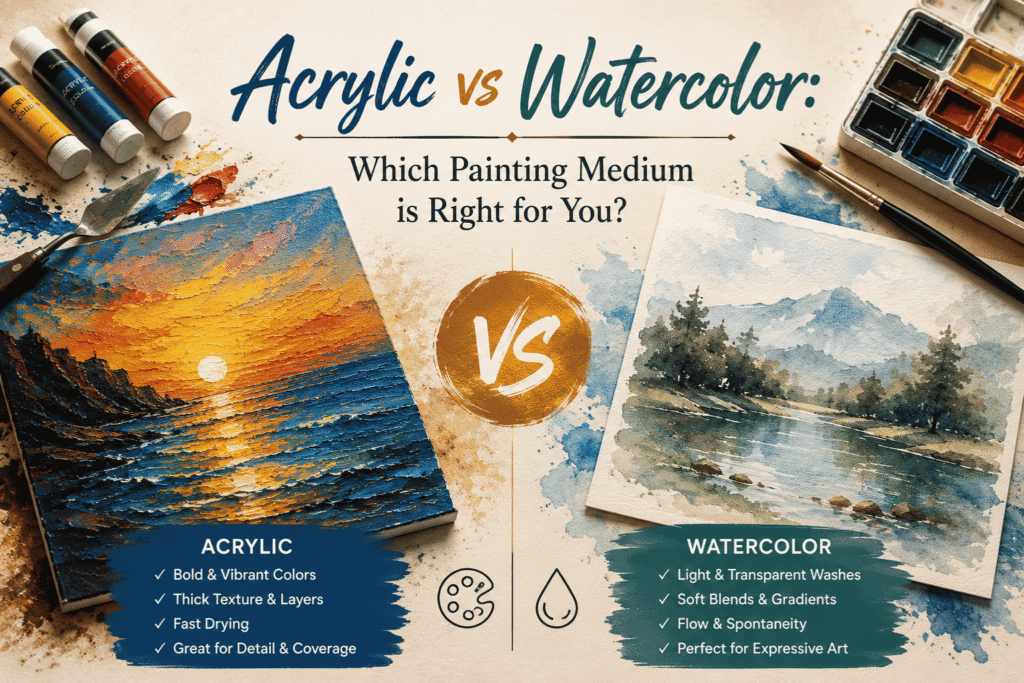
Choosing the right painting medium is one of the most important decisions for both artists and art collectors. Every medium carries its own personality, texture, emotional quality, and visual impact. Among the most popular choices in contemporary art are acrylic paintings and watercolor paintings — two mediums that differ significantly in technique, appearance, and artistic expression.
Whether you are an aspiring artist, a beginner experimenting with materials, or a collector exploring acrylic paintings for sale, understanding the strengths and characteristics of each medium can help you make informed creative decisions.
Acrylic paintings are known for their bold colors, texture, durability, and versatility, while watercolor paintings are admired for their softness, transparency, and fluid elegance. Both mediums offer unique artistic possibilities and continue to dominate galleries, exhibitions, and private art collections worldwide.
In this comparison guide, we explore the differences between acrylic and watercolor painting, including techniques, materials, visual effects, maintenance, collector appeal, and how to choose the right medium for your artistic goals.
Understanding Acrylic Paintings
Acrylic painting is one of the most versatile forms of modern art. Acrylic paints are water-based pigments mixed with acrylic polymer emulsion, allowing artists to create vibrant and durable artworks on multiple surfaces.
Acrylic paintings became especially popular during the twentieth century because of their flexibility and quick drying nature.
Artists often use acrylics for:
- Contemporary abstract art
- Symbolic paintings
- Textured artworks
- Mixed media art
- Modern interior art
Explore acrylic paintings for sale here:
Acrylic Paintings
Understanding Watercolor Paintings
Watercolor painting is one of the oldest and most delicate painting traditions. Watercolors use pigments suspended in a water-soluble binder, creating transparent and fluid visual effects.
Unlike acrylics, watercolor paintings rely heavily on lightness, layering, and paper texture to achieve their beauty.
Artists often use watercolors for:
- Landscapes
- Urban sketches
- Floral art
- Nature studies
- Atmospheric compositions
Explore watercolor paintings here:
Watercolor Paintings
Acrylic vs Watercolor – The Core Difference
The primary difference between acrylic and watercolor lies in opacity, texture, and working method.
| Feature | Acrylic | Watercolor |
|---|---|---|
| Appearance | Bold & textured | Soft & transparent |
| Drying Time | Fast | Moderate |
| Surface | Canvas, paper, wood | Primarily paper |
| Texture | Thick & layered | Fluid & light |
| Corrections | Easier to repaint | Difficult to correct |
| Durability | Highly durable | More delicate |
Acrylic paintings offer stronger surface texture and color intensity, while watercolor paintings emphasize transparency and softness.
Visual Style and Artistic Expression
Acrylic Paintings – Bold and Dynamic
Acrylic paintings often create:
- Strong color contrast
- Heavy texture
- Contemporary visual energy
- Dramatic compositions
Artists can apply acrylics using:
- Brushes
- Palette knives
- Sponges
- Mixed media tools
Because acrylics dry quickly, artists can build multiple layers rapidly and experiment freely.
Acrylic paintings are especially popular in modern interior spaces due to their bold visual impact.
Watercolor Paintings – Soft and Atmospheric
Watercolor paintings create:
- Delicate transitions
- Transparent layering
- Gentle emotional tone
- Natural light effects
The medium often feels more spontaneous because water movement influences the final composition.
Watercolors are ideal for artists who enjoy fluidity, subtlety, and atmospheric storytelling.
Comparing Painting Techniques
Acrylic Painting Techniques
Acrylic artists often use:
- Impasto texture
- Dry brushing
- Glazing
- Palette knife work
- Layering techniques
These methods create depth, texture, and expressive movement.
Acrylics also allow artists to combine:
- Sand
- Paper
- Ink
- Charcoal
- Mixed media elements
This flexibility makes acrylic art highly experimental.
Watercolor Techniques
Watercolor artists use techniques such as:
- Wet-on-wet
- Wet-on-dry
- Gradient washes
- Lifting
- Layer glazing
Watercolor requires careful control because mistakes are harder to cover or repaint.
The medium rewards patience, timing, and water management.
Which Medium Is Easier for Beginners?
Both mediums offer unique learning experiences.
Acrylics for Beginners
Advantages:
- Easier corrections
- Fast layering
- Bold visible results
- Flexible techniques
Challenges:
- Quick drying time
- Color darkening after drying
Many beginners feel more confident with acrylic painting because mistakes can be painted over easily.
Watercolors for Beginners
Advantages:
- Minimal materials required
- Portable setup
- Elegant visual effects
Challenges:
- Difficult corrections
- Water control complexity
- Transparent layering management
Watercolors may appear simple initially but require strong technical discipline.
Durability and Longevity
Acrylic Paintings
Acrylic paintings are highly durable because:
- Acrylic polymer forms a protective surface
- Colors remain vibrant over time
- Paint resists cracking and fading
This durability makes acrylic paintings for sale especially attractive for long-term collectors.
H3: Watercolor Paintings
Watercolor paintings are more delicate and sensitive to:
- Moisture
- Sunlight
- Improper framing
Professional framing with UV-protected glass helps preserve watercolor artworks for decades.
Surface and Material Differences
Acrylic Art Materials
Acrylic paintings can be created on:
- Canvas
- Wood
- Handmade paper
- Stone slate
- Fabric
Artists also use:
- Heavy body acrylics
- Gel mediums
- Texture pastes
Watercolor Art Materials
Watercolor painting primarily requires:
- High GSM paper
- Watercolor brushes
- Pigment pans or tubes
Paper quality significantly affects the final result.
Artists often prefer:
- Cotton paper
- Handmade paper
- Textured watercolor sheets
Emotional Qualities of Each Medium
Every painting medium carries emotional characteristics.
Acrylic Art Emotions
Acrylic paintings often feel:
- Powerful
- Energetic
- Contemporary
- Expressive
- Textured
This makes acrylics ideal for abstract and symbolic artworks.
Watercolor Art Emotions
Watercolors often feel:
- Calm
- Reflective
- Nostalgic
- Fluid
- Atmospheric
The transparency of watercolor creates emotional softness.
Interior Design and Collector Preferences
Collectors often choose mediums based on interior aesthetics.
Why Collectors Prefer Acrylic Paintings
Acrylic paintings work beautifully in:
- Contemporary homes
- Luxury interiors
- Offices
- Hotels
- Modern galleries
Their bold colors and textures create strong focal points.
Why Collectors Love Watercolor Paintings
Watercolor paintings suit:
- Minimalist interiors
- Elegant spaces
- Personal collections
- Calm environments
Their softness adds subtle sophistication.
Choosing the Right Medium for Your Artistic Style
The best medium ultimately depends on:
- Personality
- Creative goals
- Preferred techniques
- Emotional expression
- Patience level
Choose acrylics if you enjoy:
- Bold textures
- Layering
- Experimentation
- Contemporary abstraction
Choose watercolors if you enjoy:
- Fluid movement
- Transparency
- Delicate atmospheric effects
- Gentle storytelling
Explore art collections here:
Collections
Acrylic and Watercolor in Contemporary Art
Today, many contemporary artists combine acrylic and watercolor techniques within mixed-media artworks.
This fusion creates:
- Textural contrast
- Layer complexity
- Emotional variation
- Unique visual identity
Contemporary Indian artists increasingly experiment with hybrid mediums to explore symbolic, cultural, and spiritual themes.
Final Thoughts – Which Painting Medium Is Right for You?
Both acrylic and watercolor painting offer incredible creative possibilities. Neither medium is better universally — each simply serves different artistic intentions and emotional experiences.
Acrylic paintings provide strength, versatility, texture, and bold visual impact, making them ideal for modern contemporary art and expressive experimentation.
Watercolor paintings offer fluidity, softness, transparency, and atmospheric beauty, making them perfect for delicate storytelling and emotional subtlety.
Whether you are an artist exploring new materials or a collector searching for acrylic paintings for sale or elegant watercolor artworks, understanding these mediums helps you appreciate the unique craftsmanship behind every painting.
Ultimately, the best medium is the one that connects most deeply with your creative vision and emotional expression.
Connect Now: Facebook | Instagram | Twitter | Threads | Linkedin | Pinterest