
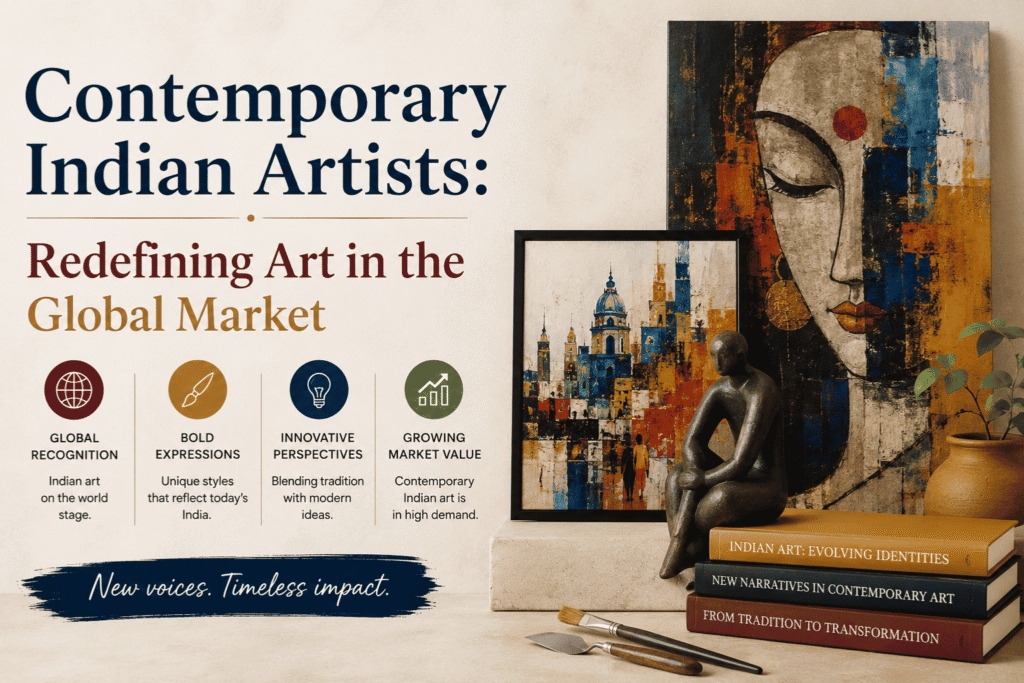
The global art industry is undergoing a significant transformation, and contemporary Indian artists are becoming increasingly influential within this evolving landscape. Through bold experimentation, cultural storytelling, symbolic expression, and innovative visual language, Indian artists are redefining how the world experiences modern art.
Over the last two decades, Indian art has expanded far beyond regional galleries and local exhibitions. Contemporary Indian artists are now participating in international art fairs, global exhibitions, museum showcases, and online art platforms that connect their work with collectors worldwide.
What makes this artistic movement especially powerful is its ability to blend ancient cultural heritage with contemporary creative expression. Today’s Indian artists are not abandoning tradition; instead, they are reinterpreting mythology, spirituality, tribal symbolism, social identity, and modern life through fresh artistic perspectives.
From abstract paintings and symbolic artworks to mixed-media experimentation and conceptual storytelling, contemporary Indian art has become one of the most dynamic forces within the global art market.
In this industry insights article, we explore how contemporary Indian artists are reshaping international art conversations, attracting global collectors, and creating a distinctive artistic identity in the modern world.
The Evolution of Contemporary Indian Art
Indian art has always carried deep historical and cultural richness. Traditional Indian painting styles, temple art, miniature paintings, tribal art, and spiritual symbolism have influenced artistic practices for centuries.
However, contemporary Indian artists have expanded these traditions by integrating:
- Modern abstraction
- Conceptual art
- Urban narratives
- Experimental materials
- Global artistic influences
This fusion has created a new visual language that feels both culturally rooted and internationally contemporary.
Unlike earlier generations focused primarily on academic realism, modern contemporary artists often prioritize:
- Emotional expression
- Symbolic storytelling
- Personal identity
- Social commentary
- Cultural reinterpretation
The result is a highly diverse and globally relevant art movement.
Why the Global Art Market Is Paying Attention to Indian Artists
The global art market increasingly recognizes the originality and depth of contemporary Indian art.
Several factors contribute to this growing international attention.
Cultural Richness
India offers one of the world’s most layered cultural histories. Contemporary artists reinterpret:
- Mythology
- Spirituality
- Ancient symbols
- Tribal traditions
- Religious narratives
This cultural depth gives Indian art a distinctive visual identity.
Experimental Artistic Approaches
Many contemporary Indian artists blend:
- Acrylic painting
- Mixed media
- Sculpture
- Installation art
- Digital experimentation
This creative flexibility appeals to global contemporary collectors seeking innovation.
Emotional and Symbolic Storytelling
Indian art often combines visual beauty with philosophical meaning.
Rather than focusing purely on aesthetics, contemporary artists explore:
- Human consciousness
- Memory
- Spirituality
- Social transformation
- Identity and belonging
These themes resonate internationally.
Contemporary Indian Artists and Cultural Identity
One of the strongest aspects of Indian contemporary art is its relationship with cultural identity.
Artists frequently explore:
- Ancient civilizations
- Sacred geometry
- Folk traditions
- Urban modernization
- Spiritual symbolism
This allows artworks to communicate both local cultural experience and universal human emotion.
Many artists reinterpret historical references through modern abstraction and conceptual art, creating a bridge between tradition and modernity.
This balance makes Indian art globally recognizable while preserving cultural authenticity.
The Rise of Emerging Indian Artists
Emerging contemporary artists are becoming especially important within the global art market.
Unlike established masters whose artworks may already command extremely high prices, emerging artists offer:
- Fresh creative perspectives
- Experimental approaches
- Accessible pricing
- Strong growth potential
Collectors increasingly seek emerging Indian artists because they represent the future direction of contemporary art.
These artists often challenge traditional boundaries and introduce:
- unconventional materials
- symbolic abstraction
- interdisciplinary practices
- new cultural narratives
This originality attracts both collectors and international curators.
How Technology Has Expanded the Reach of Indian Art
Digital platforms have transformed how contemporary Indian artists connect with audiences globally.
Today, artists can:
- showcase portfolios online
- participate in virtual exhibitions
- sell artwork internationally
- engage directly with collectors
Online visibility has allowed Indian artists to gain recognition beyond traditional gallery systems.
Collectors worldwide can now explore:
- original paintings
- exhibition archives
- artist interviews
- studio processes
- digital catalogs
through artist websites and online galleries.
International Exhibitions and Global Recognition
Participation in international exhibitions has significantly increased the visibility of contemporary Indian artists.
Global exhibitions create opportunities for:
- cross-cultural dialogue
- international collector exposure
- artistic collaboration
- market expansion
Many Indian artists now exhibit in:
- Dubai
- London
- Paris
- Singapore
- New York
These exhibitions help position Indian art within broader global contemporary conversations.
Explore exhibitions here:
Exhibitions
The Influence of Symbolism in Contemporary Indian Art
Symbolism remains one of the defining characteristics of modern Indian artistic expression.
Artists often use:
- mythological figures
- lotus imagery
- sacred animals
- tribal motifs
- cosmic forms
- spiritual geometry
These symbols create emotional and philosophical depth within artworks.
Contemporary symbolic art allows viewers from different cultures to interpret meaning through personal experience while still preserving Indian cultural identity.
Abstract Art and Contemporary Indian Expression
Abstract painting has become particularly significant among contemporary Indian artists.
Abstract Indian art frequently merges:
- spiritual philosophy
- emotional energy
- cultural symbolism
- textured surfaces
- expressive movement
This approach creates artworks that feel visually modern while remaining deeply connected to Indian heritage.
Many artists use abstraction to communicate concepts that cannot be explained literally through realistic imagery.
Contemporary Indian Artists in the Collector Market
Collectors increasingly invest in Indian contemporary art because of:
- originality
- cultural significance
- global relevance
- artistic craftsmanship
The collector market now values Indian artists not only regionally but internationally.
Why Collectors Appreciate Indian Art
Collectors often seek artworks that:
- tell meaningful stories
- reflect cultural identity
- carry symbolic depth
- combine tradition with innovation
Indian contemporary paintings often fulfill all these qualities simultaneously.
Growing Investment Potential
As international awareness grows, contemporary Indian art continues attracting:
- galleries
- museums
- auction houses
- private collectors
This growing recognition increases long-term investment potential.
The Role of Artist Websites and Online Galleries
Professional artist websites now play a critical role in global visibility.
Strong online platforms allow artists to:
- present collections professionally
- archive exhibitions
- improve SEO visibility
- connect with international audiences
Explore the artist profile here:
About
View the gallery here:
Gallery
Challenges Facing Contemporary Indian Artists
Despite growing international recognition, many contemporary artists still face challenges such as:
- limited institutional support
- market competition
- visibility barriers
- balancing originality with commercial demand
However, digital exposure and international exhibitions continue creating new opportunities for independent artists.
Many artists now build successful careers through direct collector engagement and online platforms.
The Future of Indian Contemporary Art
The future of Indian art appears increasingly global, experimental, and interdisciplinary.
Emerging trends include:
- immersive installations
- digital art integration
- eco-conscious materials
- symbolic abstraction
- cross-cultural collaborations
At the same time, artists continue drawing inspiration from:
- ancient traditions
- mythology
- spirituality
- indigenous visual culture
This balance between heritage and innovation ensures that contemporary Indian art remains both culturally meaningful and globally competitive.
Why Contemporary Indian Artists Matter Globally
Contemporary Indian artists are redefining the global art market because they offer something unique:
- cultural depth
- philosophical storytelling
- emotional symbolism
- visual experimentation
Their work demonstrates how art can preserve tradition while embracing modernity.
Rather than imitating Western artistic trends, many Indian artists create original visual languages rooted in their own cultural experiences.
This authenticity gives Indian contemporary art growing international importance.
Final Thoughts on Contemporary Indian Art
The rise of the contemporary Indian artist within the global art market reflects a larger shift toward diversity, cultural storytelling, and authentic artistic expression.
Today’s Indian artists are not only participating in global art conversations — they are actively shaping them through innovation, symbolism, abstraction, and deeply personal narratives.
As collectors, galleries, and institutions continue recognizing the value of Indian contemporary art, the influence of these artists will likely grow even further in the years ahead.
For viewers and collectors alike, contemporary Indian art offers more than visual beauty. It offers insight into culture, identity, spirituality, and the evolving relationship between tradition and modern creativity.
Connect Now: Facebook | Instagram | Twitter | Threads | Linkedin | Pinterest