
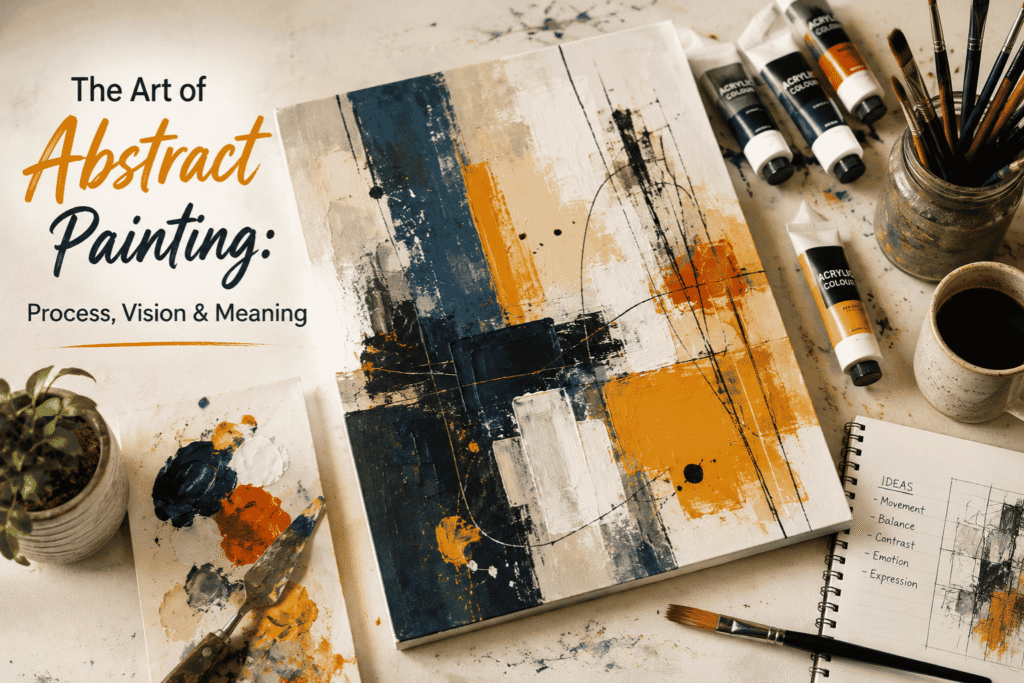
Abstract painting is one of the most expressive and emotionally powerful forms of visual art. Unlike realistic or representational art, contemporary abstract art does not attempt to replicate the physical world exactly. Instead, it communicates ideas, emotions, movement, spirituality, and imagination through colors, forms, textures, and symbolic compositions.
Over the decades, abstract paintings have evolved into a universal artistic language capable of expressing thoughts beyond words. Artists use abstraction to explore inner emotions, cultural narratives, spirituality, memory, and personal experiences while giving viewers the freedom to interpret the artwork in their own way.
Today, contemporary abstract art continues to dominate modern galleries, exhibitions, homes, and interior spaces because of its emotional depth and timeless visual appeal. From acrylic art to symbolic mixed-media works, abstraction remains one of the most influential movements in modern creativity.
In this educational essay, we explore the process, vision, and meaning behind abstract painting while understanding why this art form continues to captivate artists and collectors worldwide.
Understanding Contemporary Abstract Art
Contemporary abstract art focuses on expression rather than direct representation. Instead of painting recognizable landscapes, portraits, or objects, abstract artists use visual elements such as:
- Shapes
- Lines
- Colors
- Symbols
- Textures
- Geometric patterns
- Organic forms
These elements combine to create emotional or conceptual experiences.
Abstract art allows both artist and viewer to move beyond literal interpretation. Each painting becomes open to multiple meanings, depending on personal perspective and emotional connection.
Unlike traditional academic painting, abstract art encourages freedom, experimentation, spontaneity, and intuition.
The Origins of Abstract Paintings
Abstract painting emerged in the early twentieth century as artists began challenging traditional artistic conventions. Painters sought new ways to express emotions, philosophy, spirituality, and modern life without relying on realistic imagery.
Early abstract movements included:
- Expressionism
- Cubism
- Surrealism
- Minimalism
- Symbolic abstraction
Over time, abstract paintings became deeply connected with psychology, spirituality, and human emotion.
Today, contemporary abstract art combines traditional artistic influences with modern experimentation, creating artworks that feel both timeless and innovative.
Why Abstract Paintings Connect Emotionally
One of the greatest strengths of abstract paintings is their emotional flexibility. Since abstraction avoids rigid storytelling, viewers naturally project their own emotions, memories, and interpretations onto the artwork.
Freedom of Interpretation
A landscape painting usually depicts a recognizable scene. Abstract art, however, invites personal meaning.
One viewer may experience peace.
Another may feel movement or tension.
Someone else may discover spiritual symbolism.
This openness creates deeper viewer engagement.
Emotional Impact Through Color
Colors play a vital role in acrylic art and abstract expression.
For example:
- Blue may suggest calmness or introspection
- Red can symbolize passion, strength, or chaos
- Gold may evoke spirituality or divinity
- Black often introduces mystery or depth
Abstract artists intentionally use color psychology to influence emotional response.
The Creative Process Behind Abstract Art
The creative process of abstract painting is often intuitive, layered, and deeply personal. Unlike traditional realism, abstraction rarely follows strict rules.
Every artist develops a unique approach, but most contemporary abstract art evolves through experimentation and emotional exploration.
Inspiration and Concept Development
Abstract artists gather inspiration from:
- Nature
- Human emotions
- Spirituality
- Music
- Ancient cultures
- Symbols
- Urban environments
- Dreams and memory
Many contemporary Indian artists also incorporate mythology, tribal forms, and sacred geometry into abstract compositions.
Sketching and Composition
Some artists begin with loose sketches, while others paint directly onto the canvas spontaneously.
Composition remains important even in abstraction. Artists carefully balance:
- Positive and negative space
- Rhythm
- Contrast
- Texture
- Visual movement
Layering and Texture Building
Layering is essential in acrylic art.
Artists build depth using:
- Palette knives
- Brushes
- Dry textures
- Washes
- Mixed media
- Scraping techniques
These layers create emotional complexity and visual richness.
The Importance of Acrylic Art in Contemporary Painting
Acrylic art has become one of the most popular mediums in contemporary abstract art because of its versatility and durability.
Why Artists Prefer Acrylic Paints
Acrylic paints offer:
- Fast drying time
- Vibrant pigmentation
- Texture flexibility
- Layering capability
- Strong durability
Artists can create both smooth minimalist compositions and heavily textured expressive surfaces using acrylics.
Acrylic Art and Modern Interiors
Modern collectors often prefer abstract acrylic paintings because they:
- Complement contemporary interiors
- Add color energy to spaces
- Create sophisticated focal points
- Blend with minimalist design
Explore acrylic artwork collections here:
Acrylic on Canvas
Symbolism in Contemporary Abstract Art
Many abstract paintings contain hidden symbolic meanings even when they appear non-representational at first glance.
Artists may use:
- Ancient symbols
- Geometric forms
- Spiritual motifs
- Tribal patterns
- Mythological references
These symbolic layers create intellectual and emotional depth.
Contemporary Indian abstract art frequently merges traditional cultural symbols with modern visual language.
This fusion creates artworks that feel deeply rooted in history while remaining globally relevant.
Abstract Art as a Reflection of Inner Vision
Abstract painting often acts as a visual reflection of the artist’s subconscious mind.
Unlike realistic painting, abstraction allows artists to communicate:
- Inner conflict
- Spiritual awareness
- Personal transformation
- Cultural memory
- Emotional healing
Every brushstroke becomes part of a larger emotional narrative.
Many artists describe abstraction as a meditative or intuitive process where the artwork evolves naturally over time.
The Role of Texture and Movement
Texture adds physical energy to abstract paintings.
Heavy textures can create:
- Dramatic visual depth
- Dynamic movement
- Emotional intensity
Smooth surfaces may communicate:
- Silence
- Simplicity
- Minimalism
- Spiritual calmness
Movement is another important aspect of contemporary abstract art. Artists guide the viewer’s eye through:
- Directional brushstrokes
- Repeating forms
- Rhythmic patterns
- Contrasting colors
This movement creates engagement and visual storytelling without literal imagery.
Why Collectors Invest in Abstract Paintings
Abstract paintings remain highly desirable among collectors because of their timeless nature and emotional versatility.
Universal Appeal
Abstract art transcends language and cultural boundaries.
Interior Design Compatibility
Abstract acrylic art works beautifully in:
- Homes
- Luxury interiors
- Hotels
- Galleries
- Corporate offices
Emotional and Intellectual Depth
Collectors appreciate abstract paintings because they evolve emotionally over time. The meaning of the artwork can change depending on the viewer’s life experiences.
Explore abstract collections here:
Abstract Paintings
Contemporary Indian Abstract Art and Cultural Identity
Indian abstract artists are increasingly gaining global recognition for blending heritage with contemporary artistic experimentation.
Themes often include:
- Spirituality
- Mythology
- Sacred symbols
- Tribal art influences
- Nature and cosmic energy
Artists like Gautam Mazumdar reinterpret ancient symbolism through modern abstraction, creating artworks that bridge cultural history with contemporary expression.
Learn more about the artist here:
About Us
How Viewers Should Experience Abstract Art
There is no single correct way to understand abstract paintings.
Instead of asking:
“What is this painting exactly?”
Viewers should ask:
- What emotions does this artwork create?
- What movement or energy do I feel?
- Which colors attract me?
- What personal memories does this painting awaken?
Abstract art becomes meaningful through emotional interaction.
Final Thoughts on the Meaning of Abstract Painting
Contemporary abstract art continues to shape modern visual culture because it speaks directly to emotion, imagination, spirituality, and human experience.
Through color, texture, movement, symbolism, and creative freedom, abstract paintings allow artists to communicate ideas that often cannot be expressed through words alone.
Whether created through acrylic art, mixed media, or symbolic compositions, abstraction remains one of the most powerful forms of artistic expression in the contemporary world.
For collectors, viewers, and artists alike, abstract art is not simply decoration — it is an evolving dialogue between emotion, vision, and meaning.
Connect Now: Facebook | Instagram | Twitter | Threads | Linkedin | Pinterest