
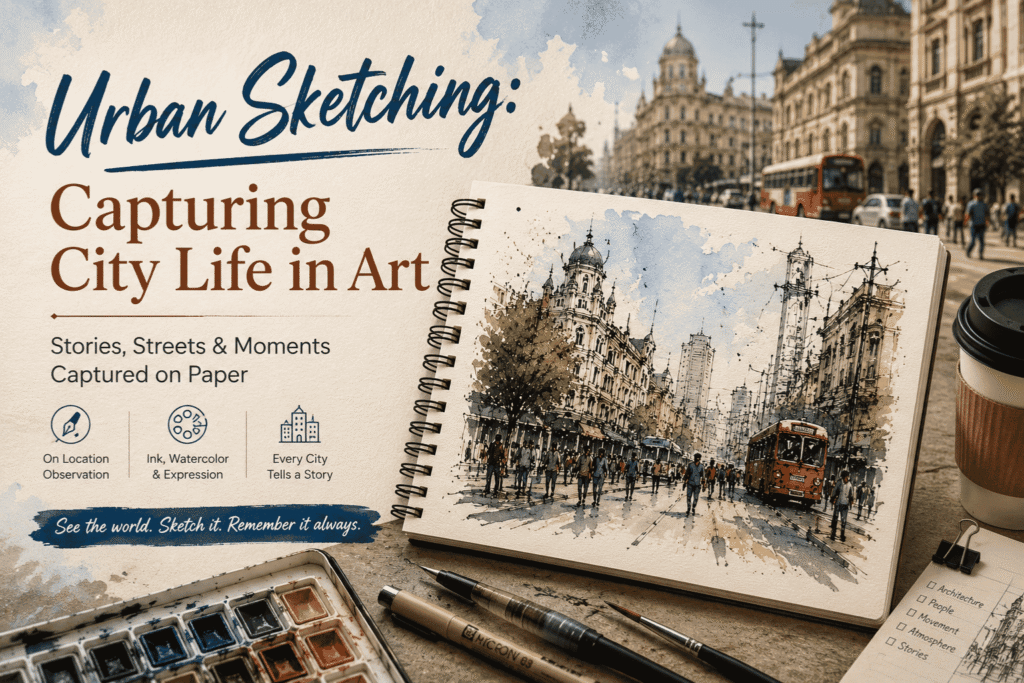
Cities are constantly moving, changing, and evolving. Every street corner, crowded market, café, railway station, and skyline carries its own visual rhythm and emotional energy. Urban sketching transforms these everyday moments into living artworks, allowing artists to document the pulse of city life through direct observation and creative expression.
An urban sketch artist captures more than buildings and streets. Through spontaneous pen sketches, watercolor washes, and expressive lines, urban sketching records atmosphere, movement, architecture, culture, and human interaction in real time.
Unlike studio-based art, urban sketches are created on location. Artists sit in parks, train stations, marketplaces, cafés, and busy streets, translating the surrounding world onto paper using quick observation and artistic intuition.
In this behind-the-scenes exploration, we look at the creative process of urban sketching, the tools artists use, and how city art becomes a visual diary of modern life.
What Is Urban Sketching?
Urban sketching is the practice of drawing and painting on location while directly observing urban environments. It combines architecture, storytelling, movement, and personal interpretation into spontaneous visual documentation.
Urban sketches often include:
- Buildings and streets
- Public spaces
- Markets and cafés
- City skylines
- Transportation scenes
- Everyday human activity
Unlike photography, urban sketching adds the artist’s emotional perspective and artistic personality to each scene.
An urban sketch artist observes not only physical structures but also the atmosphere and rhythm of the city.
The Rise of Urban Sketch Artists Worldwide
Over the last decade, urban sketching has become a global artistic movement. Artists worldwide now document cities through sketchbooks rather than cameras alone.
The popularity of urban sketches has grown because:
- They feel authentic and personal
- They preserve cultural memory
- They capture real-time experiences
- They encourage direct observation
- They blend travel, architecture, and storytelling
Urban sketching communities now exist across major cities, bringing artists together through exhibitions, sketch walks, and collaborative art events.
Why Urban Sketches Feel More Alive Than Photographs
Photographs freeze a moment instantly, but urban sketches interpret moments emotionally.
When artists sketch on location, they make selective creative decisions:
- Which details to emphasize
- What movement to exaggerate
- How to simplify architecture
- Which colors create atmosphere
This artistic interpretation gives city art a unique emotional quality.
A rainy street may appear nostalgic.
A crowded marketplace may feel energetic.
An old building may carry historical emotion.
Urban sketching transforms ordinary city scenes into expressive narratives.
The Creative Process Behind Urban Sketching
Urban sketching requires observation, speed, adaptability, and creative focus.
Choosing the Location
Urban sketch artists often search for places with:
- Strong architectural character
- Human activity
- Dynamic lighting
- Cultural atmosphere
- Interesting perspectives
Popular sketching locations include:
- Railway stations
- Historic streets
- Cafés
- Markets
- Waterfronts
- Public squares
Every location offers a unique visual story.
Observing Before Sketching
Before drawing begins, artists spend time observing:
- Movement patterns
- Light and shadow
- Architectural structure
- Human interaction
- Perspective lines
Observation is one of the most important skills in urban sketching.
Creating the Initial Pen Sketch
Many urban sketch artists begin with loose pen sketches using waterproof ink pens or fineliners.
Pen sketches help define:
- Structure
- Perspective
- Composition
- Visual rhythm
These quick lines form the foundation of the artwork.
Explore pen sketch collections here:
Pen Sketches
The Role of Watercolor in Urban Sketching
Watercolor is one of the most commonly used mediums in urban sketching because it allows artists to work quickly while capturing atmosphere and light beautifully.
Why Watercolor Works for City Art
Watercolor paintings create:
- Soft atmospheric effects
- Transparent layers
- Natural light representation
- Fluid movement
- Quick color application
Urban sketch artists often combine watercolor with ink linework for expressive city scenes.
Explore watercolor collections here:
Water Color Painting
Capturing Mood Through Color
Colors influence how viewers emotionally experience city art.
For example:
- Warm oranges may create evening nostalgia
- Blue tones may suggest rain or calmness
- Bright reds may emphasize energy and movement
Artists use watercolor strategically to communicate emotional atmosphere rather than strict realism.
Urban Sketching as Visual Storytelling
Every city contains countless stories unfolding simultaneously.
Urban sketching captures:
- Street musicians
- Café conversations
- Vendors at markets
- Commuters waiting
- Historic architecture
- Everyday routines
These moments become visual narratives preserved through drawing.
Unlike highly polished studio artworks, urban sketches often retain spontaneous imperfections that make them feel authentic and alive.
The Importance of Imperfection in Urban Sketches
One of the most beautiful aspects of urban sketching is its acceptance of imperfection.
Lines may remain unfinished.
Perspective may shift slightly.
Brushstrokes may flow unpredictably.
These imperfections create:
- Energy
- Movement
- Authenticity
- Human connection
Urban sketch artists embrace spontaneity instead of striving for photographic precision.
Tools Used by an Urban Sketch Artist
Urban sketching requires portable and versatile materials.
Common tools include:
- Sketchbooks
- Waterproof fineliners
- Fountain pens
- Brush pens
- Watercolor sets
- Portable palettes
- Water brushes
- Pencils
Artists often carry lightweight kits that allow quick setup while sketching outdoors.
City Art and Architectural Observation
Urban sketching naturally develops architectural awareness.
Artists learn to observe:
- Building proportions
- Perspective
- Windows and facades
- Urban textures
- Structural rhythm
Architectural sketches often become important visual records of changing cities and disappearing heritage spaces.
City art preserves urban identity through artistic observation.
How Urban Sketching Improves Artistic Skills
Urban sketching strengthens several core artistic abilities:
Observation Skills
Artists become more aware of:
- Detail
- Lighting
- Human movement
- Spatial relationships
Speed and Confidence
Sketching on location improves decision-making and drawing confidence.
Composition Awareness
Artists learn how to simplify complex scenes into strong visual compositions.
Creative Adaptability
Urban environments constantly change, forcing artists to adapt quickly.
The Emotional Connection Between Artist and City
Every urban sketch becomes a memory connected to a place and moment.
Artists often develop emotional relationships with:
- Familiar cafés
- Historic neighborhoods
- Daily travel routes
- Cultural landmarks
Through repeated sketching, cities become deeply personal artistic landscapes.
Urban sketching transforms ordinary surroundings into meaningful creative experiences.
Urban Sketching in Contemporary Art
Today, urban sketching exists at the intersection of:
- Fine art
- Travel documentation
- Architectural illustration
- Contemporary visual storytelling
Many contemporary artists blend:
- Pen sketches
- Watercolor techniques
- Mixed media
- Abstract city forms
This fusion creates modern city art that feels both documentary and expressive.
View contemporary artworks in the gallery here:
Gallery
Why Collectors Appreciate Urban Sketch Art
Collectors increasingly value urban sketches because they:
- Feel intimate and authentic
- Capture cultural memory
- Document changing cities
- Combine spontaneity with craftsmanship
Original pen sketches and watercolor city art often carry emotional warmth that digital imagery cannot replicate.
Each sketch becomes a personal visual memory of a place and moment in time.
Final Thoughts on Urban Sketching
Urban sketching is more than drawing buildings or streets. It is a way of observing life attentively and translating fleeting moments into meaningful visual stories.
Through pen sketches, watercolor washes, expressive lines, and spontaneous observation, urban sketch artists preserve the spirit of cities in deeply personal ways.
In an increasingly fast-paced digital world, urban sketching encourages artists and viewers alike to slow down, observe carefully, and reconnect with the beauty of everyday urban life.
Whether documenting historic architecture, busy markets, quiet cafés, or modern skylines, urban sketches continue to celebrate the emotional and cultural heartbeat of the city through art.
Connect Now: Facebook | Instagram | Twitter | Threads | Linkedin | Pinterest