Abstract art mediums are the materials and techniques that abstract artists use to create work — and the choice of medium is never just a technical decision. The medium shapes the mood, texture, and meaning of the finished piece. Whether you are an artist choosing your tools or a collector trying to understand what you are looking at, knowing the main abstract art mediums gives you a richer experience of the work.
In this guide, we cover the 7 essential abstract art mediums — what each one is, how artists use it, and what makes each medium distinctive. We also look at how Mumbai-based abstract artist Gautam Mazumdar of Kreative On Kanvas works across multiple mediums to create his original abstract paintings.
What Are Abstract Art Mediums?
An art medium (plural: mediums or media) refers to the material an artist uses to create a work — the paint, ink, charcoal, or other substance that leaves a mark on the support (canvas, paper, board). In abstract art, the medium is especially important because abstract work is not bound by representation: the medium itself — its texture, transparency, weight, and behaviour — often becomes the subject of the painting.
Abstract artists choose mediums for the specific qualities they bring. Acrylic paint dries fast and can be built up in thick impasto layers. Watercolour flows and bleeds in ways that cannot be fully controlled. Oil paint stays wet for days, allowing blending and reworking. Each medium offers a different range of possibilities — and a different set of constraints.
7 Essential Abstract Art Mediums
1. Acrylic Paint
Acrylic is the most widely used medium in contemporary abstract art, and for good reason. It is water-soluble when wet, dries quickly, can be thinned to watercolour-like washes or thickened with mediums to create heavy impasto texture, and is permanent and flexible when dry. The range of effects possible with acrylic paint is enormous.
Abstract artists use acrylic in several ways: pouring it onto the canvas for fluid, organic shapes (a technique called acrylic pouring or fluid art); applying it thickly with a palette knife for textured, gestural marks; building up transparent glazes for luminous colour depth; or using it in combination with other materials (sand, paper, fabric) in mixed media works.
The fast drying time — often seen as a limitation — is actually a strength for abstract work, allowing artists to build up layers without long waits. Gautam Mazumdar works extensively in acrylic, using the medium’s versatility to create the bold, textured surfaces that characterise his abstract paintings.
2. Oil Paint
Oil paint has been the dominant fine art medium for over 500 years, and it remains essential to abstract art. The key quality of oil paint is its extended working time — it stays wet for days or even weeks, allowing artists to blend, rework, and modify the painting long after the initial application.
For abstract artists, this extended working time enables a particular kind of gestural painting — where marks are pushed, pulled, blended, and reworked in a continuous process of improvisation and decision-making. The Abstract Expressionist painters of mid-20th century New York — Rothko, de Kooning, Kline — worked primarily in oil, exploiting its slow-drying properties for their large-scale gestural works.
Oil paint also has an inherent richness and depth of colour that is difficult to achieve with other mediums. The oil binder gives colours a luminosity and saturation that makes oil paintings appear to glow from within.
3. Watercolour
Watercolour is a transparent, water-based medium that is traditionally associated with delicate, luminous washes and careful control. In abstract art, however, watercolour is often used for exactly the opposite qualities — its unpredictability, its tendency to bloom and bleed, and its resistance to full control make it ideal for organic, spontaneous abstract work.
Abstract watercolour work exploits the medium’s natural properties: wet-on-wet techniques create soft, flowing colour blends; dropping salt into wet paint creates crystalline textures; applying alcohol or wax to the paper creates areas that resist the paint. The paper’s texture, the amount of water used, and the angle of the board all affect how the paint behaves.
The inherent luminosity of watercolour — where the white of the paper shows through the transparent paint — gives watercolour abstracts a lightness and freshness that heavier mediums cannot replicate. Kreative On Kanvas includes watercolour works among the original artworks available, capturing this distinctive quality of the medium.
4. Mixed Media
Mixed media is not a single medium but the combination of multiple mediums in a single work. In abstract art, mixed media is extremely common — artists routinely combine acrylic paint with collage elements, oil paint with charcoal, watercolour with ink, or any other combination of materials.
The appeal of mixed media in abstract work is the range of textures, surfaces, and visual effects that can be achieved within a single piece. A mixed media abstract might combine the smooth, flowing quality of poured acrylic with the coarse texture of sand or grit, the delicacy of tissue paper, and the bold mark of charcoal — creating a visual complexity that no single medium could provide.
Mixed media also allows artists to incorporate found materials — newspaper cuttings, fabric, natural materials — giving the work a connection to the physical world even when the final image is fully abstract. Many contemporary Indian abstract artists, including Gautam Mazumdar, work in mixed media, drawing on the full range of available materials.
5. Ink and Pen
Ink — whether applied with a brush, dip pen, ball pen, or through printing techniques — has a distinctive quality in abstract art: its irreversibility. Unlike paint, which can be reworked, ink marks are permanent. This forces a directness and commitment to mark-making that many abstract artists find creatively liberating.
Abstract ink work ranges from large-scale brush paintings influenced by East Asian calligraphy to intricate, dense pen drawings that build up complex abstract surfaces through repetition and accumulation. The ball pen, in particular, has emerged as a serious fine art medium — its controlled, precise line can be used to build up tonal gradations and textural effects that rival those achievable with traditional drawing tools.
Gautam Mazumdar’s ball pen paintings demonstrate the expressive range of ink as a medium — from gestural mark-making to careful tonal building, the ball pen in his hands becomes a fully expressive abstract art tool.
6. Pastel and Charcoal
Dry mediums — pastel and charcoal — offer abstract artists a direct, immediate form of mark-making that is quite different from paint. Pastel, which is pure pigment in stick form, can produce extraordinarily intense colour; charcoal produces a velvety, expressive line and can be blended to create smooth tonal gradations.
In abstract work, pastel and charcoal are often used for their gestural quality — the speed with which marks can be made, the ability to cover large areas quickly, and the physical engagement they require. Large-scale charcoal abstracts, in particular, have a raw, immediate quality that oil or acrylic painting at the same scale often lacks.
Both pastel and charcoal are also frequently combined with other mediums — charcoal underpainting is common in oil painting, while pastel is often used over painted backgrounds to add colour accents and texture.
7. Digital Media
Digital art has become an established medium in abstract art over the past two decades. Using software such as Procreate, Adobe Photoshop, or Illustrator, artists can create abstract works that explore colour, form, and composition with a flexibility that physical mediums cannot match — infinite undos, instant colour changes, the ability to work at any scale.
Digital abstract art can simulate the look of traditional mediums (a digital oil painting, a digital watercolour) or explore effects that are unique to the digital domain — perfect geometric forms, generative patterns, animated works. While some collectors and galleries still prefer work in traditional physical mediums, digital abstract art has found a substantial audience, particularly in the NFT space.
Many artists now work across both physical and digital mediums — using digital tools for sketching, planning, and colour studies before working on the final physical piece.
How to Choose an Abstract Art Medium
If you are an artist choosing your first abstract art medium, the most important factor is your working style. Consider:
- Speed of working: Do you prefer to work quickly and decisively, or slowly and contemplatively? Acrylic and ink reward quick, decisive working; oil paint rewards slow, meditative building.
- Control vs. spontaneity: Do you want to control every mark, or do you want the medium to surprise you? Acrylic pouring and wet watercolour are inherently spontaneous; pen and pencil work rewards control.
- Scale: What size do you want to work at? Oil and acrylic can be used at any scale; watercolour is traditionally smaller; pastel and charcoal scale up well.
- Surface and texture: Are you interested in textural effects? Acrylic with impasto medium or mixed media are the best choices for heavy texture; watercolour and digital are essentially flat.
- Budget: Oil paint and high-quality watercolour can be expensive; acrylic is generally more affordable; digital art requires initial hardware investment but no ongoing material costs.
Abstract Art Mediums and the Collector
If you are a collector buying abstract art, the medium affects both what you are looking at and how to care for the work:
- Oil paintings are the most durable if properly stored — they can last centuries. They should not be varnished until fully dry (which can take months), and should be kept away from extreme temperature changes.
- Acrylic paintings are very durable and require minimal care, but should be kept away from extreme cold, which can make the paint brittle. They attract dust and should be dusted gently.
- Watercolours are light-sensitive and should be framed under UV-protective glass and kept out of direct sunlight. They are typically on paper and require careful handling.
- Mixed media works care requirements depend on the specific materials used — ask the artist about the materials in the work before purchase.
- Works on paper (ink, charcoal, pastel) should be framed under glass and stored flat or rolled, never folded.
Abstract Art by Gautam Mazumdar — Kreative On Kanvas
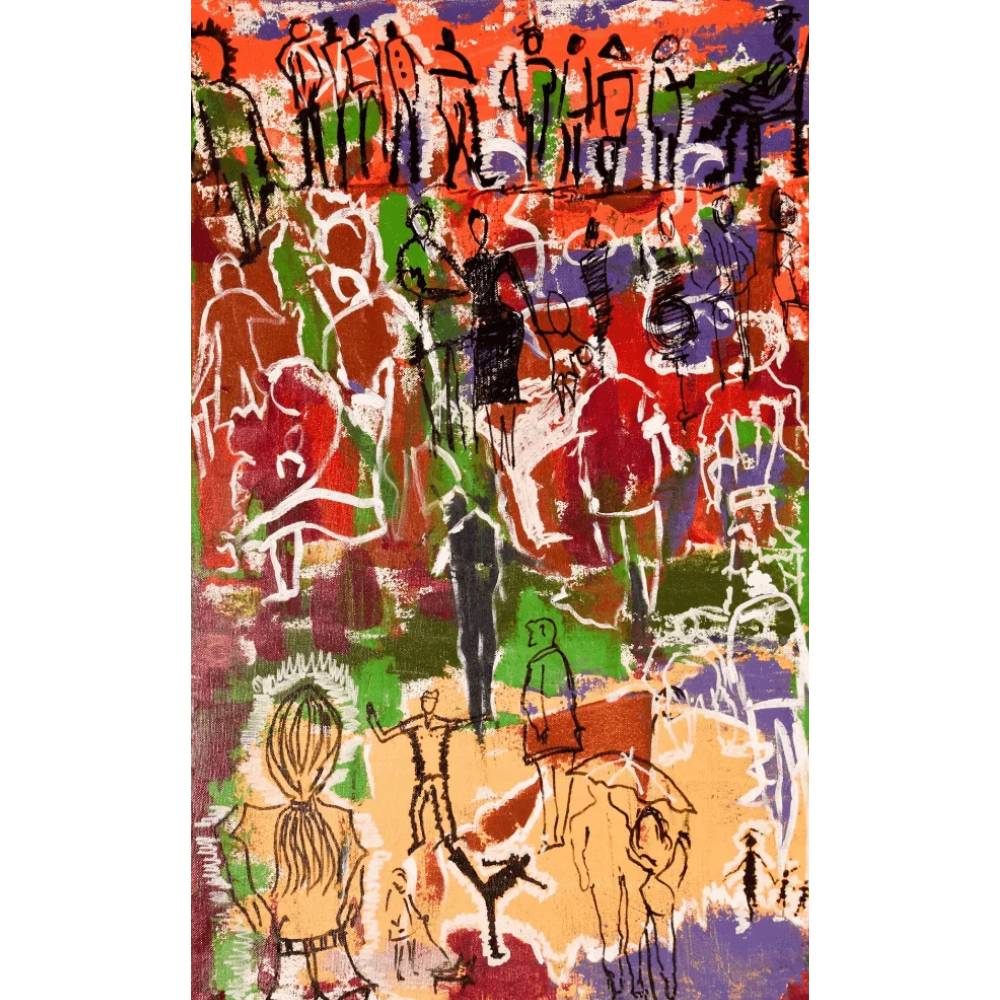
Mumbai-based artist Gautam Mazumdar works across multiple abstract art mediums — acrylic, watercolour, mixed media, and ball pen — creating original abstract paintings that explore colour, form, and texture. His work is rooted in direct observation and experimentation: each medium is chosen for what it brings to the specific piece, not as a fixed style.
At Kreative On Kanvas, you can browse and buy original abstract paintings directly from his Mumbai studio — acrylic on canvas, watercolour on paper, and ball pen artworks. Each piece is an original, signed work available with pan-India delivery.
You can also explore Gautam’s sketch books to see the observational drawing practice that underpins his abstract paintings — the connection between direct observation and abstract expression that runs through all his work.
Abstract Art Mediums — Frequently Asked Questions
What is the most popular medium for abstract art?
Acrylic paint is currently the most popular medium for abstract art, particularly among contemporary artists. Its versatility — from thin washes to thick impasto — fast drying time, and durability make it well-suited to the experimental, layered approach that characterises much contemporary abstract work.
What medium did abstract expressionists use?
The Abstract Expressionists (New York School, 1940s–60s) worked primarily in oil paint. Artists like Jackson Pollock, Mark Rothko, Willem de Kooning, and Franz Kline all worked in oil, exploiting its slow drying time for their gestural, large-scale canvases. Some also worked in enamel paint (Pollock’s drip paintings used house enamel) for its different flow properties.
Can beginners use any abstract art medium?
Yes. Acrylic paint is the most beginner-friendly abstract art medium — it is affordable, dries quickly, is easy to clean up, and is forgiving of mistakes (you can paint over errors once dry). Watercolour is beautiful but requires more patience to learn. Oil paint is best approached once you have some painting experience, as it requires understanding of drying times and layering principles.
What is the difference between medium and style in abstract art?
The medium is the material used (acrylic, oil, watercolour); the style is the visual approach (geometric abstraction, gestural abstraction, colour field painting). The same style can be executed in many different mediums — a geometric abstract can be made in oil, acrylic, or digital. The medium affects the texture and surface quality of the work; the style determines its visual language.
How can I identify the medium used in an abstract painting?
Look at the surface texture and sheen. Oil paintings typically have a slight gloss and very smooth blending. Acrylic paintings can range from matte to gloss, often show built-up texture, and have a slightly plastic quality to the surface. Watercolours are on paper and have a characteristic translucency. When in doubt, the artwork’s label or the gallery will state the medium — it is standard practice to disclose this information.